In short: AAC (Augmentative and Alternative Communication) is any way of communicating that supports or replaces speech — from pointing at pictures to using a speech-generating device. It gives non-speaking and minimally-speaking children a reliable way to be understood, and it does not stop speech from developing.
What is AAC?
AAC covers all the ways people communicate beyond talking. "Augmentative" means it *supports* spoken language; "alternative" means it can be used *instead of* speech. It's used by people of all ages who find speech difficult.
AAC is usually grouped into:
- Low-tech / no-tech — gestures, Key Word Sign, picture cards, communication boards or books (for example, Picture Exchange systems)
- High-tech — speech-generating devices, and apps on tablets and other everyday devices
Many people use a mix depending on the situation.
Who can benefit from AAC?
AAC can help children who:
- Are not yet talking, or have very little speech
- Are hard to understand and get frustrated
- Have a condition affecting speech (for example, autism, cerebral palsy or apraxia)
- Need a back-up way to communicate in some settings
The aim is always to give the child a reliable voice and reduce the frustration of not being understood.
Does AAC stop a child from talking?
This is the most common worry — and the reassuring answer is no. Research does not show that AAC stops speech developing. In fact, by reducing pressure and modelling language, AAC can support spoken language to grow, while giving the child a way to communicate right now.
How does a speech pathologist help with AAC?
A speech pathologist:
- Assesses how your child communicates and what they need
- Helps choose the right AAC system (low- or high-tech)
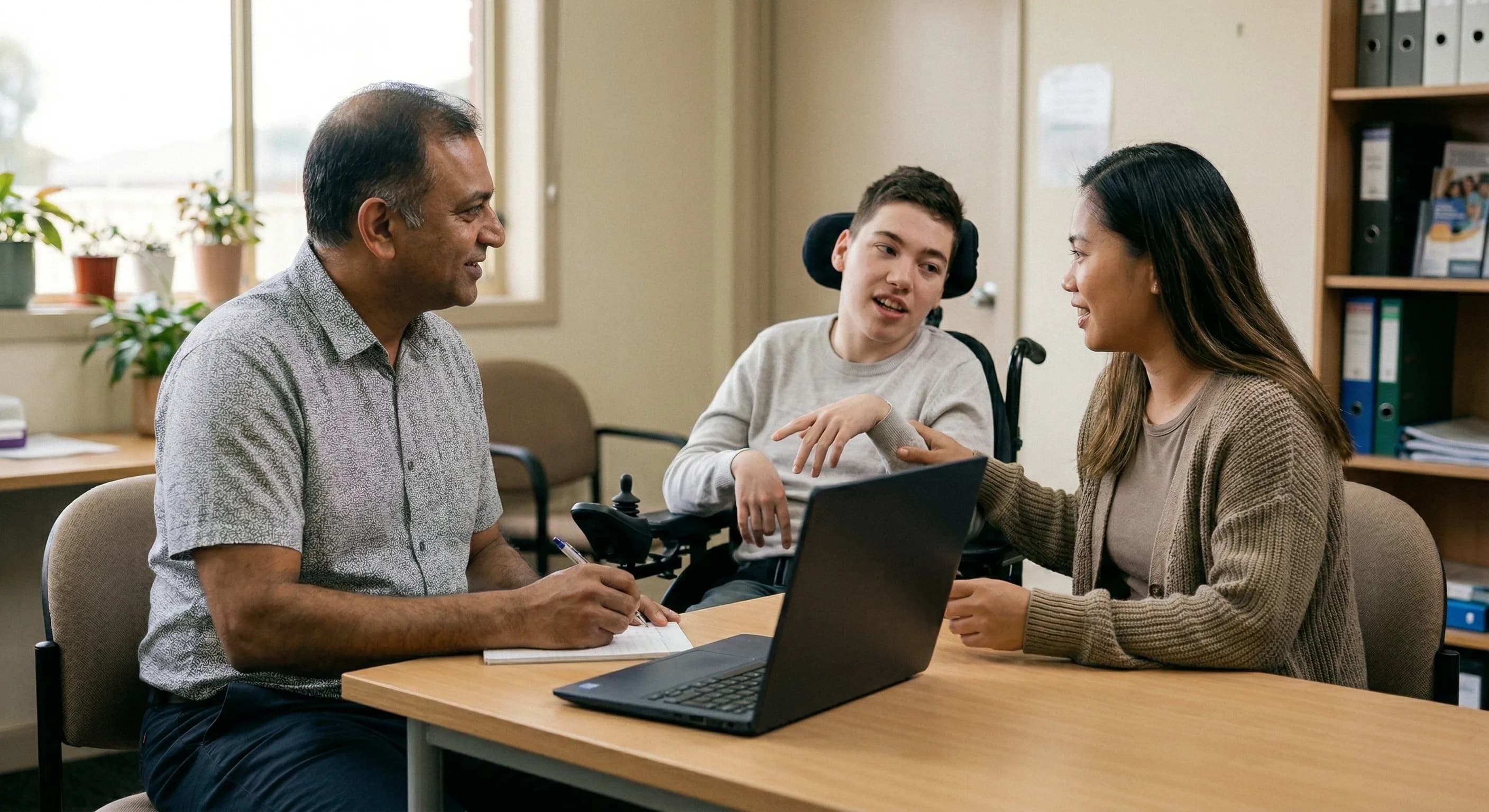
- Teaches your child — and the people around them — how to use it
- Reviews and adjusts the system as your child grows
An occupational therapist may also help set up a device so it's physically easy to use. AAC works best when everyone — family, school and therapists — uses it consistently.
How can we help?
Our speech pathology service, alongside occupational therapy, supports children using AAC across Melbourne's west. You can check your eligibility, make a referral, or contact our team — support is available in several languages.
Frequently Asked Questions
What does AAC stand for?
AAC stands for Augmentative and Alternative Communication. It means any way of communicating that supports or replaces speech — including gestures, signs, picture cards, communication boards, and speech-generating devices or apps.
Will AAC stop my child from learning to talk?
No. Evidence does not support this worry. AAC gives your child a way to communicate now and can actually support spoken language to develop by reducing pressure and modelling words.
What's the difference between low-tech and high-tech AAC?
Low-tech AAC uses things like signs, picture cards or communication boards. High-tech AAC uses speech-generating devices or apps on tablets. Many children use a combination, and a speech pathologist helps choose what suits your child.
How do I get AAC for my child?
Start with a speech pathology assessment. The speech pathologist works out what your child needs, helps select and set up the system, and teaches your child and family to use it. NDIS funding may help with assistive technology where eligible.
How can our family support AAC at home?
Use the system yourself by modelling it as you speak, keep it available everywhere, and give your child time to communicate. Your speech pathologist will coach you in strategies so AAC is supported consistently across settings.
Trusted sources for further reading
- Raising Children Network — Augmentative communication & autism
- Raising Children Network — Speech-generating devices
- Speech Pathology Australia — the peak body for speech pathologists
This article is general information only and does not replace individual professional advice. For support tailored to your child, please speak with a qualified speech pathologist.