In short: A speech pathology assessment is the first step in understanding how someone communicates — and, where relevant, how they eat and swallow. The speech pathologist gathers information, observes, and uses structured tasks to work out strengths, challenges and the right plan.
What does a speech pathologist assess?
Speech pathologists support far more than just talking. An assessment may look at any of five key areas:
- Speech — pronouncing sounds clearly
- Language — understanding and using words and sentences
- Fluency — stuttering and the flow of speech
- Voice — how the voice sounds and works
- Literacy — reading and writing
For some people, the speech pathologist also assesses swallowing and mealtime safety. The areas assessed depend on the concerns you or your referrer have raised.
Who has a speech pathology assessment?
Assessments are for children and adults. We support children with speech sound difficulties, language delays and stuttering, as well as adults with voice or communication changes. You do not always need a referral to see a speech pathologist, although one is needed to claim through some funding schemes.
What happens at the assessment?
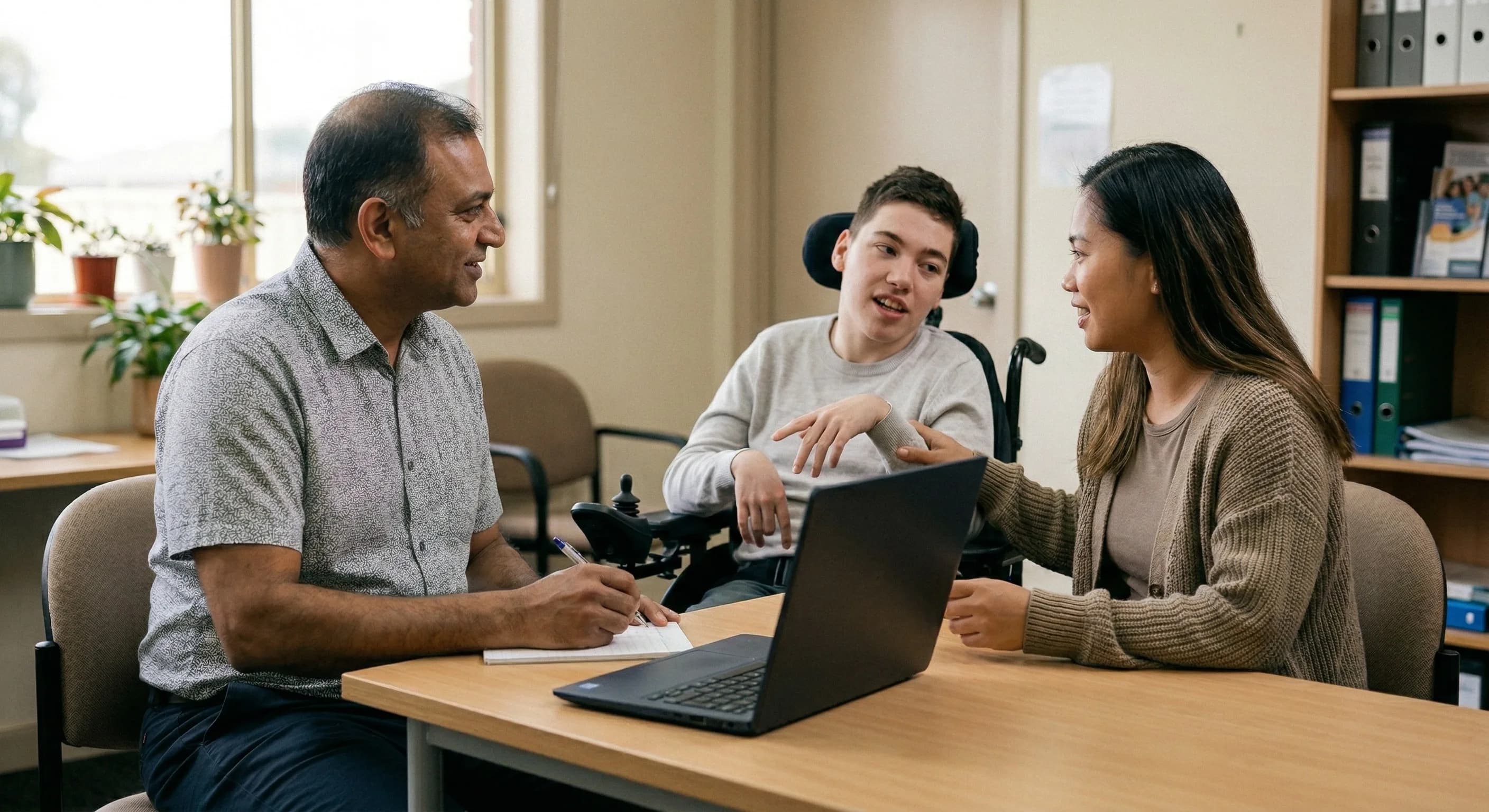
Every assessment is a little different, but most include:
- A conversation about your concerns, history and goals (with parents or carers for a child)
- Observation of how you (or your child) communicate naturally
- Structured activities or standardised tools to look closely at specific skills
- A discussion of findings and the recommended next steps
For children, much of this looks like play. Assessments can take place in our clinic or through community visits to schools, kindergartens, childcare centres and homes, so skills can be seen in everyday settings.
What happens after the assessment?
The speech pathologist explains what they found and works with you to set goals. From there they design an individualised therapy plan, which might be a short focused block or longer-term support. Progress is reviewed regularly and the plan adjusted as skills grow.
How can you access speech pathology?
Speech pathology can be funded through the NDIS, Medicare (with a GP referral and care plan), private health insurance or privately.
You can read about our speech pathology service, check your eligibility, or make a referral. To talk it through first, contact our team — support is also available in several languages.
Frequently Asked Questions
Do I need a referral to see a speech pathologist?
Not always. You can usually book a speech pathologist directly. However, you will need a referral from your GP if you plan to claim through Medicare, and your NDIS plan or support coordinator can guide you if you are accessing it through the NDIS.
How long does a speech pathology assessment take?
Most assessments take around 45–60 minutes, though it can vary depending on the person and the areas being looked at. Some assessments are split across more than one session, especially for young children who need breaks.
What should we bring to the assessment?
Bring any relevant reports (previous assessments, school or childcare reports, letters from other professionals), your NDIS plan if you have one, and a list of your main concerns. For children, it helps for a parent or carer who knows their communication well to attend.
Will my child need therapy after the assessment?
Not always. Sometimes an assessment is reassuring, or leads to simple strategies for home and school. If therapy is recommended, the speech pathologist will explain the goals and how often sessions are likely to be needed.
Can speech pathology help with eating and swallowing?
Yes. Speech pathologists assess and support swallowing and mealtime safety as well as communication. If eating, drinking or mealtimes are a concern, let us know when you book so the assessment can include this.
Trusted sources for further reading
- Speech Pathology Australia — the peak body for speech pathologists
- Healthdirect — Speech pathology: what can it help with?
This article is general information only and does not replace individual professional advice. For advice about your situation, please speak with a qualified speech pathologist or your GP.