In short: An occupational therapist (OT) helps children and adults build the everyday skills they need to live, learn and take part in daily life — from a child learning to hold a pencil to an adult regaining independence at home. "Occupation" here means any activity that occupies your time and matters to you, not just paid work.
What does an occupational therapist do?
Occupational therapists look at the practical activities a person wants or needs to do, work out what is getting in the way, and build a plan to make those activities easier. The goal is always greater independence and participation.
Depending on the person, that might mean helping with:
- Self-care like dressing, hygiene and mealtimes
- Fine motor skills such as handwriting and fastening clothing
- Gross motor skills like walking, running and coordination
- Sensory processing and emotional regulation
- Attention, planning and other thinking skills
- Social and play skills
- Getting ready for, and settling into, school
Who can occupational therapy help?
OT supports people of all ages. Our occupational therapists work with children and adults living with a range of conditions and challenges, including:
- Autism Spectrum Disorder (ASD)
- Attention Deficit Hyperactivity Disorder (ADHD)
- Global developmental delay
- Sensory processing difficulties
- Fine and gross motor skill challenges
- Difficulty with dressing, hygiene or daily routines
- Emotional regulation and attention difficulties
You do not always need a specific diagnosis to benefit — if everyday tasks are harder than they should be, an OT can help.
What happens at an occupational therapy assessment?
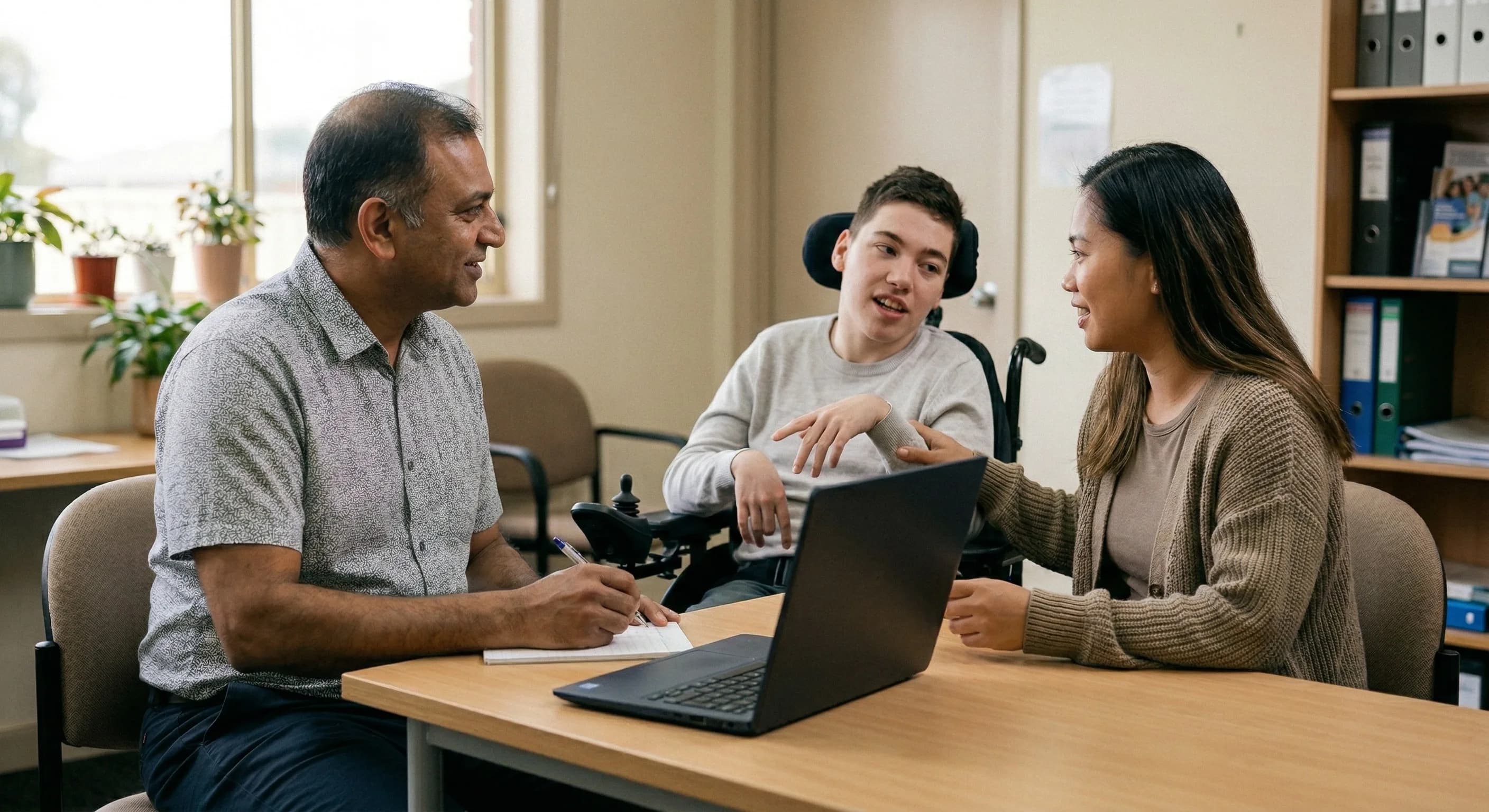
The first appointment is usually an assessment. The OT will talk with you (and, for a child, with parents or carers), watch how certain tasks are done, and may use structured activities or standardised tools to understand strengths and challenges.
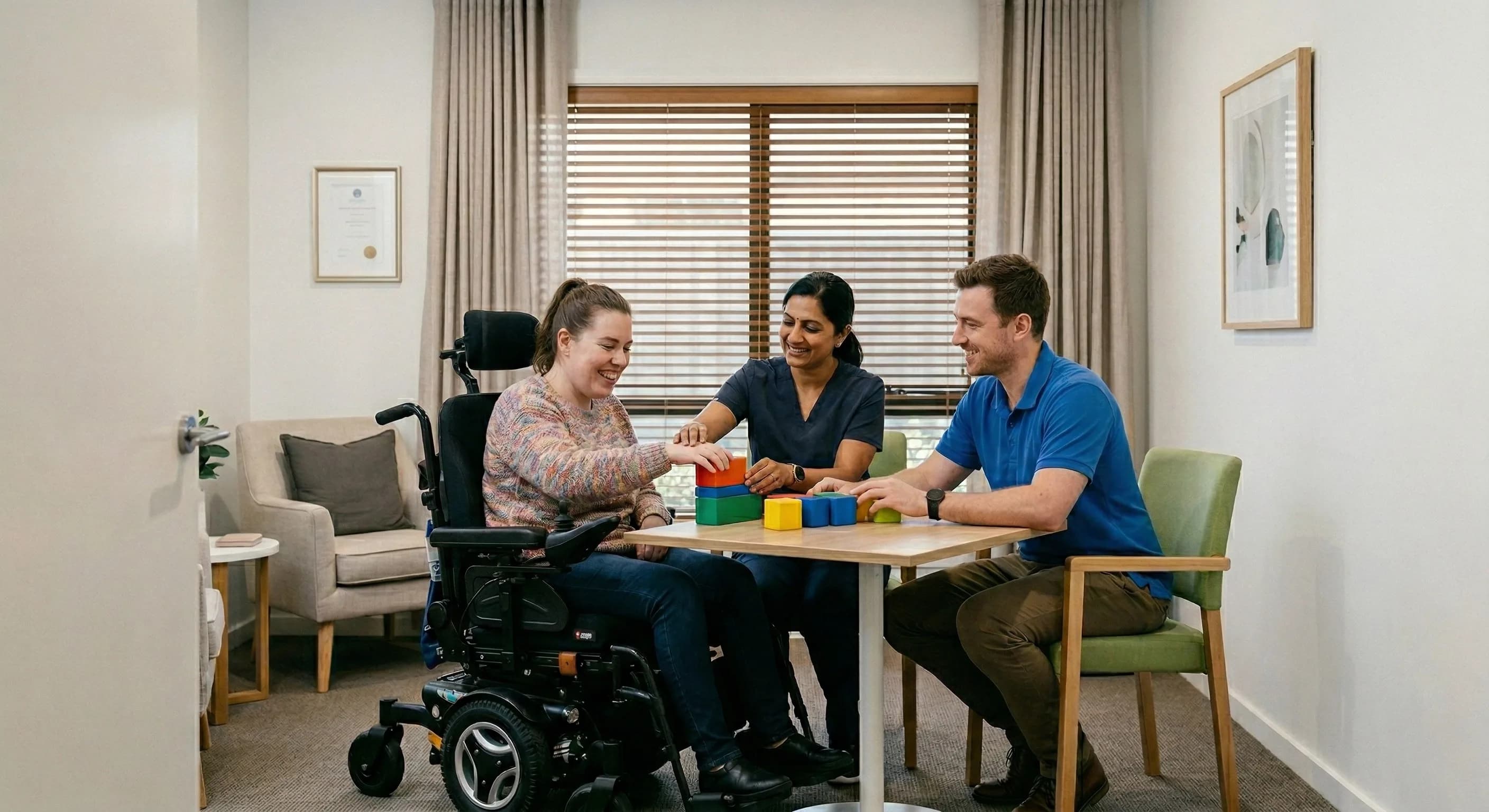
From there, the OT sets goals with you and designs an individualised program. For children, this often looks like purposeful play; for adults, it might focus on routines, equipment or strategies for the home. Sessions can take place in our clinic or, where appropriate, through community visits to schools, kindergartens, childcare centres and homes around Truganina.
How can you access occupational therapy?
Occupational therapy can be funded in several ways, including the NDIS, Medicare (with a GP referral and care plan), private health insurance, WorkCover, TAC, or privately. The right pathway depends on your situation.
You can explore our occupational therapy service, check your eligibility, or make a referral to get started. If you would prefer to talk it through first, contact our team — and support is available in several languages.
Frequently Asked Questions
What is the difference between occupational therapy and physiotherapy?
Physiotherapy focuses mainly on movement, strength and physical function. Occupational therapy focuses on helping you do the everyday activities that matter to you — which may involve motor skills, but also thinking, sensory and self-care skills. The two often work well together.
Does my child need a diagnosis before seeing an OT?
No. While many children seen by an OT have a diagnosis such as autism or ADHD, you do not need one to start. If a child is finding everyday tasks, learning or play harder than expected, an OT assessment can help identify what support would make a difference.
Is occupational therapy covered by the NDIS?
Yes. Occupational therapy is a fundable allied health support under the NDIS when it relates to a participant's disability and goals. Your support coordinator or plan manager can help confirm how your plan covers it.
How long does occupational therapy take to work?
It varies from person to person and depends on the goals. Some people attend for a short, focused block of sessions; others benefit from longer-term support. Your OT will review progress with you regularly and adjust the plan as needed.
What should we bring to the first appointment?
Bring any relevant reports (such as previous assessments, school reports or letters from other health professionals), your NDIS plan if you have one, and a list of the everyday tasks you would most like help with. For children, it helps for a parent or carer who knows their routines to attend.
Trusted sources for further reading
- Occupational Therapy Australia — the peak body for OTs
- Healthdirect — Occupational therapy
- Raising Children Network — Occupational therapist: a family guide
This article is general information only and does not replace individual professional advice. For advice about your situation, please speak with a qualified occupational therapist or your GP.