In short: Positive behaviour support (PBS) is an evidence-based approach that looks for the reason behind a person's behaviour, then builds skills and changes the environment to improve their quality of life — rather than simply trying to stop the behaviour. It is based on the idea that behaviour is a form of communication.
What is positive behaviour support?
When someone shows behaviour that is challenging — for themselves or others — PBS asks "what is this behaviour telling us?" Often a behaviour is meeting a need: to communicate, to escape something stressful, or to gain something. PBS practitioners work to understand that function and respond proactively.
The focus is on:
- Understanding how a person communicates through their behaviour
- Identifying triggers and patterns
- Building communication, social and coping skills
- Adjusting the environment to reduce stress
- Teaching safe, respectful ways to respond
- Improving overall quality of life
PBS avoids punishment-based approaches. It is positive by design.
Who can positive behaviour support help?
PBS can help people of any age who experience behaviours that affect their safety, relationships or participation. Our practitioners support people experiencing:
- Challenging behaviours
- Autism-related behavioural difficulties
- Anxiety-driven behaviours
- Communication-related behaviours
- Difficulties in school settings
- Stress and anger management needs
The aim is never to change who a person is — it is to help them feel understood and to build skills that improve daily life.
How does positive behaviour support work?
PBS usually begins with a functional behaviour assessment: the practitioner gathers information from the person, their family and carers, and observes behaviour in context to understand its function and the internal and external influences on it.
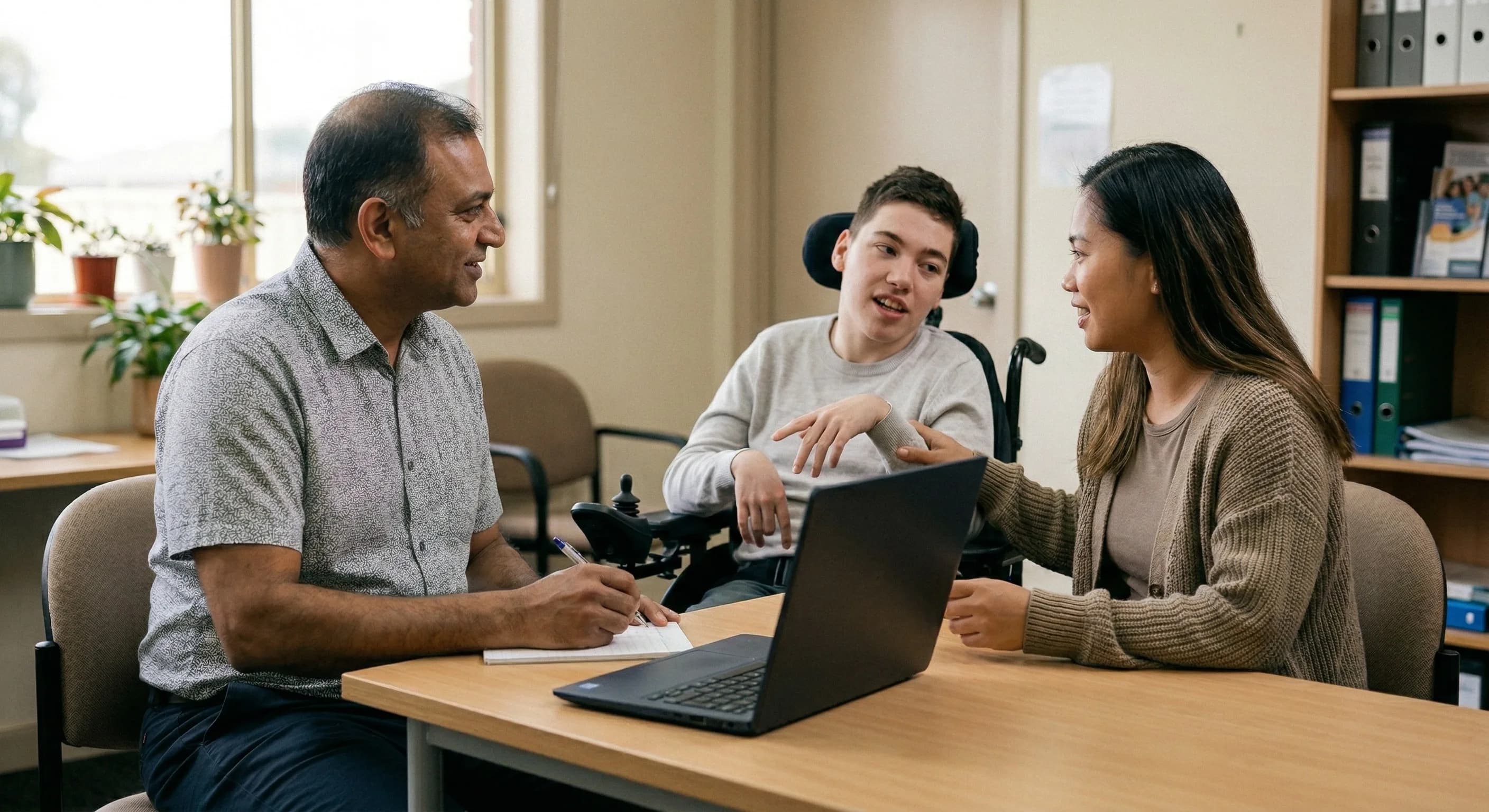
From there, the practitioner develops a behaviour support plan. A good plan is proactive — it focuses on prevention, skill-building and environmental change, and includes agreed, safe strategies for responding when behaviours occur. Families and carers are partners throughout, because consistency across settings is what makes PBS effective. Support can be provided in our clinic or through community visits to schools, kindergartens, childcare centres and homes around Truganina.
How can you access positive behaviour support?
Positive behaviour support is funded through the NDIS. It is often included where a participant's plan identifies behaviour support needs.
You can read more about our positive behaviour support service, check your eligibility, or make a referral. To talk it through first, contact our team — support is also available in several languages.
Frequently Asked Questions
Is positive behaviour support the same as discipline or punishment?
No. PBS is the opposite of a punishment-based approach. It seeks to understand why a behaviour is happening and to build skills and supports that reduce the need for that behaviour, while improving the person's quality of life.
Who delivers positive behaviour support?
PBS is delivered by trained behaviour support practitioners. In our team, this work is led by psychologists with experience in behaviour support, working alongside the person, their family and other professionals.
Is positive behaviour support funded by the NDIS?
Yes. Positive behaviour support is a recognised support under the NDIS and is funded when a participant's plan includes behaviour support. Your support coordinator or planner can confirm how your plan covers it.
How long does a behaviour support plan take?
It depends on the person and the complexity of their needs. The assessment phase takes time because understanding the function of behaviour is essential. The plan is then reviewed and adjusted over time as skills develop and circumstances change.
Can families and carers be involved?
Yes — family and carer involvement is central to PBS. Because consistency across home, school and community settings makes the biggest difference, practitioners work closely with the people around the person, including offering training and coaching.
Trusted sources for further reading
- NDIS Quality and Safeguards Commission — Positive behaviour support
- NDIS Commission — Behaviour support and restrictive practices
- NDIS Commission — Behaviour support resources
This article is general information only and does not replace individual professional advice. For advice about your situation, please speak with a qualified behaviour support practitioner or your GP.